Hydrogen gas generators produce ultra-high purity hydrogen on-demand at the point of use, eliminating the safety risks of high-pressure hydrogen cylinders and the logistics cost of cylinder delivery. On-site generation delivers a continuous, uninterrupted supply of hydrogen at precisely the required flow rate and pressure, improving both safety and process reliability.
We supply hydrogen generators based on two proven electrolysis technologies: Proton Exchange Membrane (PEM) electrolysis — ideal for flow rates of 0.3 to 30 Nm³/hr, producing 99.9995% purity hydrogen directly from deionised water with a compact, low-maintenance design; and Alkaline electrolysis — suited for larger capacities from 30 to 500 Nm³/hr, with a lower capital cost per Nm³ and robust performance at constant load.
Key applications include: turbine generator cooling in power plants (H₂ has 7× the thermal conductivity of air, making it the preferred coolant for large generators above 100 MW); hydrogenation in edible oil, margarine and chemical plants; float glass furnace atmosphere where H₂/N₂ mixtures prevent glass surface oxidation; sintering and annealing in metallurgy; and carrier gas in GC laboratories.
Our hydrogen systems include all peripheral safety equipment: automatic purging, leak detection panels (catalytic bead sensors + electrochemical sensors), pressure relief valves, flame arrestors, non-return valves and interlocked ventilation. All designs comply with PESO (Petroleum & Explosives Safety Organisation) regulations and ATEX/IEC 60079 for hazardous area classification.
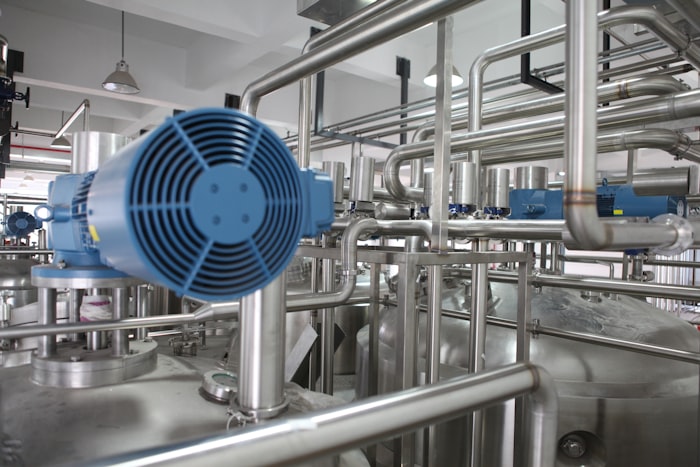
Ultra-pure deionised water (resistivity >1 MΩ·cm) is essential for PEM electrolysers and recommended for alkaline systems to extend electrode and membrane life. Deionisation is achieved via a two-bed or mixed-bed ion exchange system fed from RO permeate. Automatic conductivity monitoring with solenoid valve isolation prevents high-conductivity water from entering the electrolytic cell stack.
The PEM cell stack consists of multiple cells connected in series, each comprising a Nafion® proton exchange membrane sandwiched between platinum-group metal electrocatalysts on a titanium current collector. At the anode, water is oxidised to oxygen, protons and electrons. Protons migrate through the membrane to the cathode, where they are reduced to hydrogen gas. Product gas purity exceeds 99.99% at cell exit, with residual oxygen below 10 ppm.
In alkaline electrolysers, a 25–30% KOH (potassium hydroxide) electrolyte solution circulates between stainless steel electrodes separated by a microporous diaphragm (Zirfon® or asbestos-free polymer). Hydrogen evolves at the cathode and oxygen at the anode. The cell operates at 80–85°C for optimal efficiency. Large-scale industrial systems with 1 MW+ ratings use this technology for power-to-gas and green hydrogen applications.
Product hydrogen exits the electrolyser saturated with water vapour and entrained electrolyte (alkaline systems). A gas-liquid separator removes entrained liquid droplets. The hydrogen then passes through a catalytic deoxidiser to remove residual O₂ by recombination with H₂ (Pt catalyst at 100°C), followed by an activated alumina desiccant dryer to achieve a dew point below -60°C. Final H₂ purity exceeds 99.999%.
Product hydrogen is compressed to 10–200 bar in a cascade storage system of high-pressure seamless steel cylinders or tube trailers depending on buffer volume requirements. A pressure regulating panel reduces supply pressure to the required process pressure (typically 2–6 bar for generator cooling, 0.05–0.5 bar for laboratories). Stainless steel tubing (SS 316) is used throughout for all H₂-wetted components.
Hydrogen safety is paramount. Our systems include: catalytic bead leak detectors at all potential leakage points; electrochemical H₂ sensors in the plant room (alarm at 10% LEL, shutdown at 25% LEL); automatic purge-with-nitrogen before maintenance; ATEX-rated electrical components (Zone 1 within generator room); hydrogen-safe explosion-proof ventilation; interlocked emergency stop system; and PESO-approved pressure vessel documentation.
| Technologies | PEM / Alkaline Electrolysis |
| Flow Range | 0.3 to 500 Nm³/hr |
| H₂ Purity | 99.999% to 99.9995% |
| Dew Point | <−60°C after drying |
| O₂ in H₂ | <5 ppm (after deox.) |
| Feed Water | DI Water (<1 μS/cm) |
| Output Pressure | 1 to 200 bar |
| Power Consumption | 4.5–5.5 kWh/Nm³ H₂ (PEM) |
| Compliance | PESO / ATEX / IEC 60079 |
| Standards | ISO 14687 (H₂ Quality) |
Share your required H₂ flow, purity and application — we will provide PESO-compliant system design and ROI analysis vs. cylinder purchase within 48 hours.